
ENGIE presents its 2050 energy transition scenario for Europe
Our Media Kit
With its strong international presence and experience across various decarbonization levers, ENGIE today shares its vision of the energy transition in Europe and France.
ENGIE’s decarbonization scenario highlights the need to work with all sources of renewable energy, to ensure the resilience of the energy system and the competitiveness of European economies.
Given the strong interconnection of energy systems across Europe, the decarbonization scenario integrates 15 European countries[1]. The scenario takes into account all decarbonization levers with sufficiently mature technologies.
“The magnitude and urgency of the energy transition makes it an unprecedented challenge for Europe. At ENGIE, it is at the heart of our corporate purpose, our strategy and everything that we do. At a time when the debate on energy planning is gaining traction in Europe, we wanted to share our convictions on what we believe to be the most realistic pathway.
A successful transition means achieving net zero carbon while ensuring that the cost to citizens and businesses is kept under control, developing a robust and reliable energy system. To achieve this, we are convinced of the need to exploit all levers for decarbonization. The combination of the molecule and the electron is the answer to these challenges on a national and European scale” says Catherine MACGREGOR, Chief Executive Officer of ENGIE.
Among the main conclusions of the ENGIE scenario:
- All current levers and those under development must be activated to make “Net zero emissions” a reality in under 30 years. A diverse range of technological choices is essential, with no room for dogma.
- To meet European climate commitments, there is a need to step up efforts on energy conservation and energy efficiency, with the aim of achieving a 34% reduction in energy consumption by 2050, and in particular to encourage widespread energy-efficient renovation of buildings.
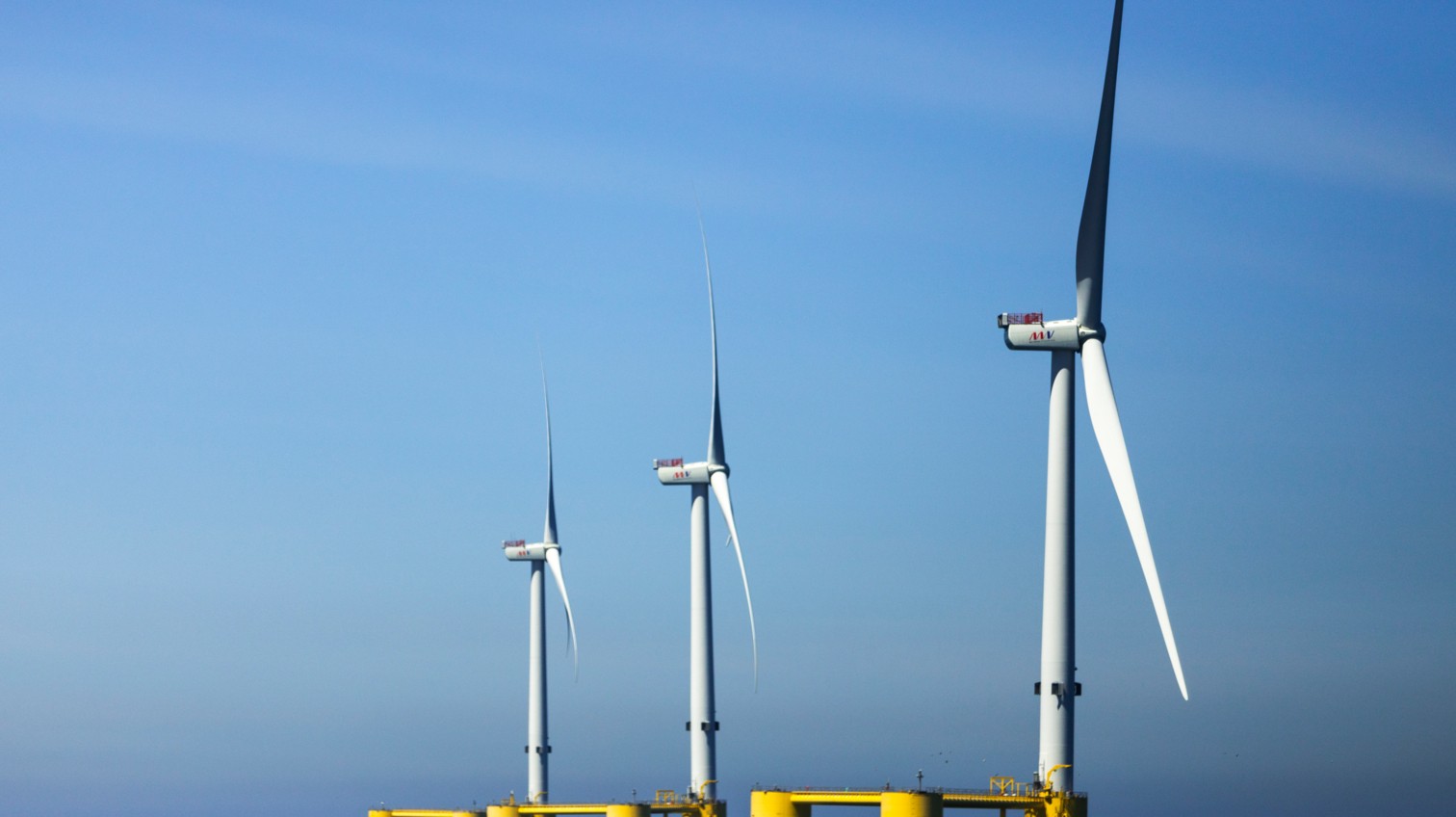
- A very significant acceleration in the growth of renewable energies, primarily electric (wind and solar power) is essential to reach European climate targets and limit costs. With demand for electricity set to almost double by 2050, renewable energies will have to cover 78% of demand in 2035 and up to 90% in 2050. In practical terms, this means that European wind and solar power generation needs to increase 3.5-fold by 2035 and 6-fold by 2050. Massive growth in renewable energies is essential, as only they can quickly and cost-effectively meet the increasing demand linked to the electrification of end uses.
- Flexibility technologies (battery storage, pumped storage, combined-cycle gas turbines) will play a central role in the energy system in the context of the growth of renewable energies. Additional capacity of 600 GW must be developed (a circa 4-fold increase on current capacity).
- Methane will be fully decarbonized by 2050 and will play a key role in the energy transition. The demand for methane will be halved in France and in the rest of Europe. In France, biomethane will play a dominant role, accounting for 2/3 of demand in 2050. The biomass potential in France is sufficient to cover the need for solid, liquid and gaseous biofuels.
- Decarbonized hydrogen and molecules produced from hydrogen (e-molecules) will play a key role in transports and for certain industrial uses. Demand for hydrogen and e-molecules – driven by the need to decarbonize heavy-duty transport and industry – will increase 8-fold by 2050 (75% for transport and 25% for the industrial sectors most difficult to decarbonize, such as steel). Almost half of this hydrogen will be produced locally.
- Investment in electricity infrastructures will increase massively, while existing gas infrastructures can be adapted to a totally carbon-free energy mix at limited cost. Minimising the cost of the energy transition, they meet the challenges of peak demand and energy system flexibility.
Based on this forward-looking analysis, ENGIE wants to make a useful contribution to public debate and has formulated recommendations for French and European public decision-makers:
- To develop renewable power and gas: stabilize the investment framework, facilitate and accelerate grid connections and the issuing of the permits required for projects;
- To facilitate the development of the hydrogen industry: finalize the European regulatory framework, with provision for rapid review clauses; ensure that public funding is granted quickly, and finance the conversion of gas infrastructures;
- To develop flexible capacity: develop appropriate remuneration models (for load shedding, batteries, decarbonized CCGTs, etc.), speed up the issuing of the permits required for projects;
- To maximize the potential of biomethane by mobilizing all available levers: ensure that there are effective support mechanisms for production in France and Europe;
- For decarbonization of the building sector by supporting all solutions: strongly develop connections to green heating networks, including geothermal energy; prioritize the use of biomethane for buildings and hybrid solutions (heat pumps, hybrid heat pumps, boiler backup, etc.); simplify access to assistance for housing with a one-stop shop bringing together all current schemes;
- For the decarbonization of industry: accelerate the use of wasted fatal energy; make funding sustainable; maintain local biomass as a renewable energy.
The Group will continue to play an active part in the discussions to help ensure the collective success of a reliable, sustainable and cost-effective energy transition.
All the documents related to this presentation can be found at: https://www.engie.com/en/decarbonization-engie-scenario
[1] Germany, Austria, Belgium, Spain, France, Ireland, Italy, Luxembourg, Netherlands, Poland, Portugal, Czech Republic, Slovakia, Switzerland, United Kingdom